Best Golf Simulator Mat: FiberBuilt vs SIGPRO Softy
The best golf simulator mat balances a real turf feel against your joints. FiberBuilt Player Preferred vs SIGPRO Softy, both near $1,000. Which one to buy.
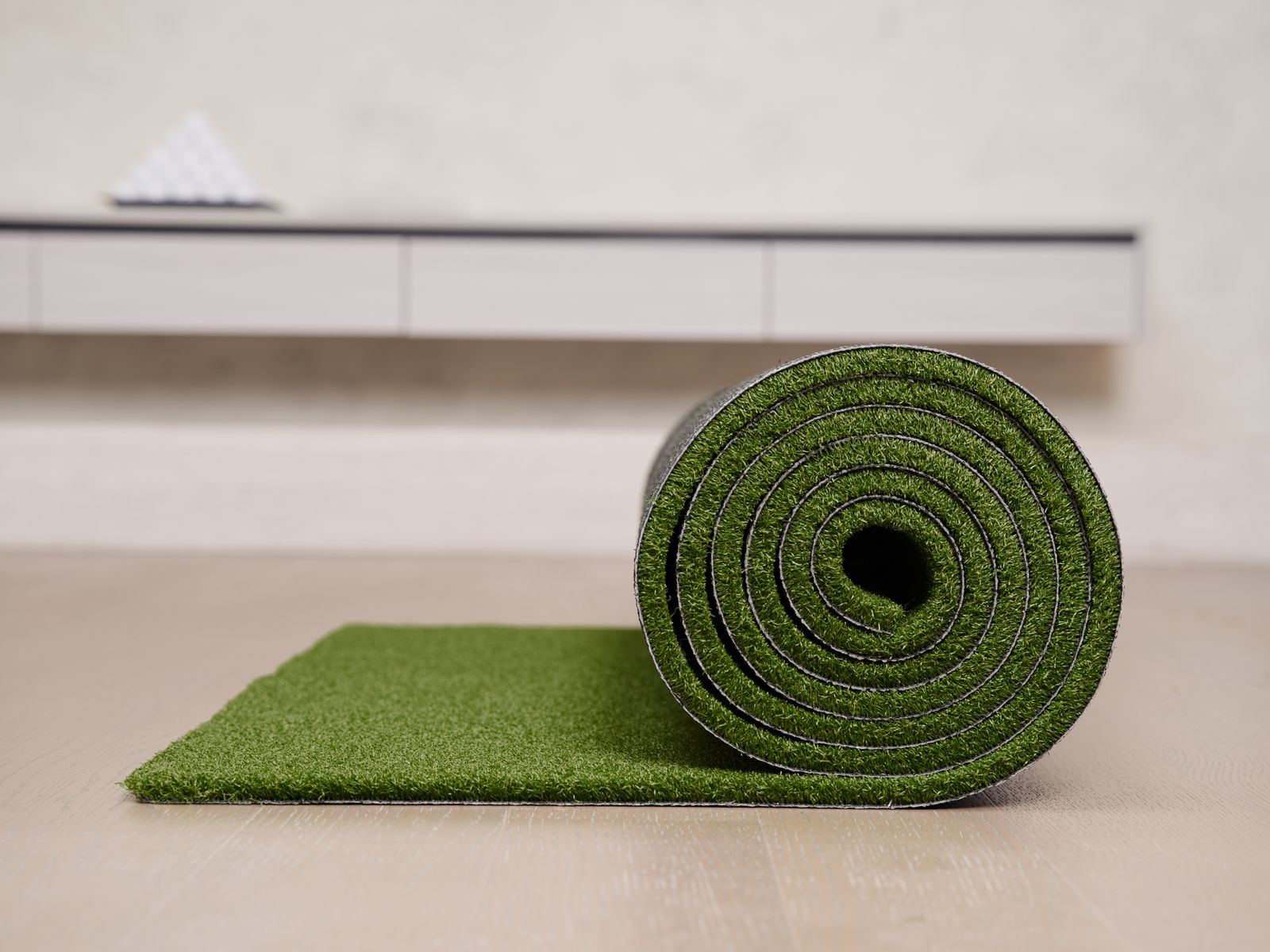
The best golf simulator mat for most home bays is the SIGPRO Softy at $999.99, which cushions your joints with a foam core and lets you swap just the worn hitting strip instead of replacing the whole mat. The FiberBuilt Player Preferred starts at $1,000 and is the pick for the highest-frequency use, built to outlast everything around it. They cost about the same, so the choice is simple: the Softy for joint comfort and easy upkeep, the FiberBuilt for maximum durability.
| Mat | Price | Feel | Standout | Best for |
|---|---|---|---|---|
| SIGPRO Softy | $999.99 (4x7), $1,199.99 (4x10) | Foam core, forgiving | Swappable hitting strip | Joint comfort, easy upkeep |
| FiberBuilt Player Preferred | from $1,000 | Firm, durable | Long-term durability | Highest-frequency use |
Why the mat matters more than you’d think
The mat is the one component you make physical contact with on every single shot, thousands of times a year, and it affects two things you’ll actually feel. The first is your body: a cheap, thin mat over a hard floor jars your wrists and elbows on every strike, and that’s how people quit indoor practice. The second is your data: a mat that lets the club skid instead of taking a realistic divot-like interaction can flatter or distort your strike. Comfort and realism are why a good mat costs real money, and why the two below are worth comparing closely.
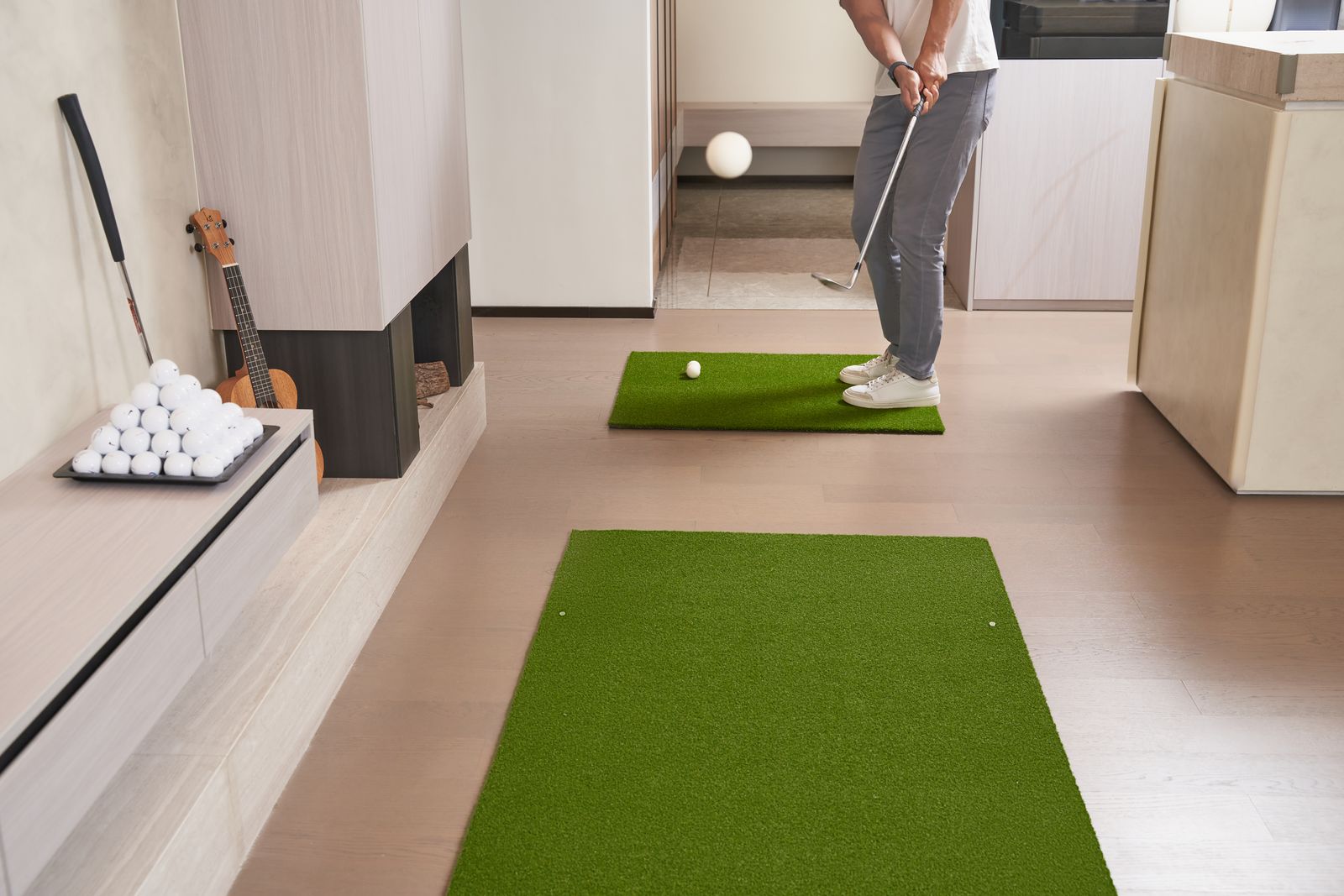
SIGPRO Softy: joint comfort and a swappable strip ($999.99)
The SIGPRO Softy is the value pick for a home bay, and its name is the point: a foam core under 1-inch Teeline turf and an ABS polyurethane impact layer gives a realistic feel that’s noticeably easier on your joints than a firm commercial mat. Its best trick is the swappable hitting strip, a 28-by-12-inch section that lifts out and replaces on its own when it wears, so you don’t buy a whole new mat when one spot goes. It comes in 4-by-7 at $999.99 and 4-by-10 at $1,199.99, and the SIGPRO line has sold north of 19,000 units.
FiberBuilt Player Preferred: built to last ($1,000+)
The FiberBuilt Player Preferred sits a tier above on durability. Starting at $1,000 without accessories, it’s the mat for someone treating the surface as a long-term fixture: high-frequency daily use, or a shared bay that sees a lot of swings. It’s firmer than the Softy, which some players prefer for a more turf-like resistance, and it’s built to shrug off years of impact. If your priority is a mat you install once and forget, this is the one.
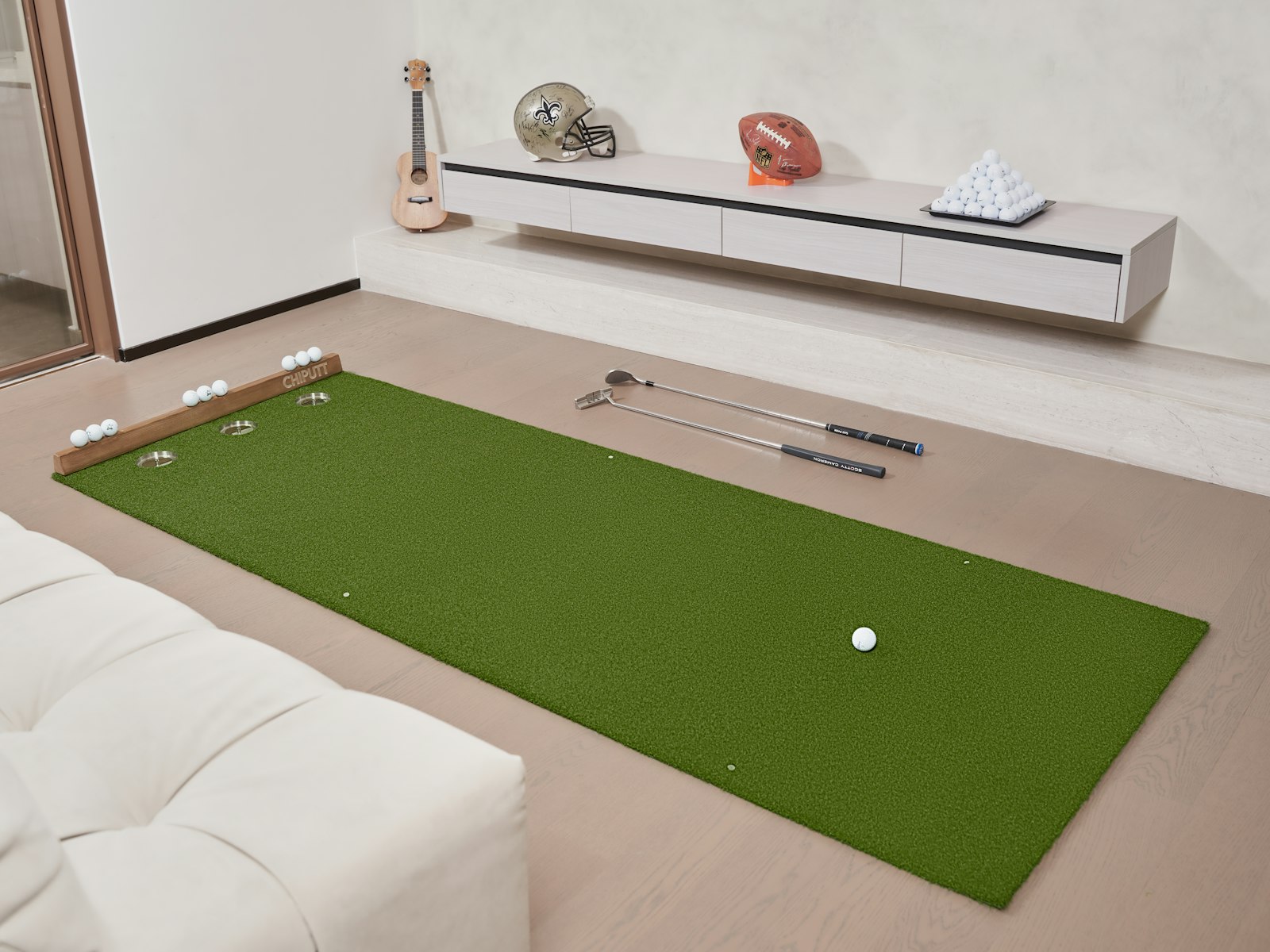
FiberBuilt or SIGPRO: which for you?
Because the prices basically overlap, this comes down to what you value. Choose the SIGPRO Softy if you want the most joint comfort and the practicality of swapping a worn strip rather than the whole mat, which is what most home golfers should optimize for. Choose the FiberBuilt Player Preferred if outright durability is the priority and you prefer a firmer feel, especially for very high-frequency or near-commercial use. Neither is a wrong call; they’re tuned for slightly different owners.
Why cheap mats cost more later
It’s tempting to save with a $100 mat, and for occasional use it’s fine. For a daily bay it’s a false economy. Thin mats jar your joints, wear through at the impact zone in a season, and can let the club skid in a way that distorts what your launch monitor reads. You end up replacing them, or worse, practicing less because it hurts. A $1,000 mat that lasts years and protects your wrists is cheaper per swing than two or three cheap ones you wear out and a body that’s had enough.

Match the mat to your build
Whichever you pick, match its height to your tee setup and enclosure so the ball sits right and your stance is level, which is part of laying out the whole bay in the build guide. See the full mat field on our components page, then price it into the rest of the build with the cost configurator.